Ever blinked and instantly regretted it? Stinging, burning, puffy eyelids within minutes of applying what you thought was a harmless swipe of mascara? If your skin reacts like an overzealous smoke alarm every time you reach for eyeliner, you’re not alone.
Nearly 70% of people with sensitive skin report adverse reactions to eye makeup—from mild irritation to full-blown allergic contact dermatitis (American Academy of Dermatology, 2023). But here’s the good news: gentle eye makeup isn’t a myth. It’s a science-backed, dermatologist-approved strategy that balances artistry with skin integrity.
In this guide, you’ll discover exactly how to choose products that won’t sabotage your skin barrier, apply techniques that minimize friction, and build a foolproof routine—even if your eyes have historically staged daily mutinies. We’ll cover ingredient red flags, vetted product recs, step-by-step application hacks, and real results from sensitive-skin warriors.
Table of Contents
- Why Does Sensitive Skin Hate Eye Makeup?
- Your Step-by-Step Gentle Eye Makeup Routine
- 7 Non-Negotiable Tips for Truly Gentle Eye Makeup
- Real People, Real Results: Before & After Success Stories
- FAQs About Gentle Eye Makeup for Sensitive Skin
Key Takeaways
- Avoid fragrances, parabens, formaldehyde donors, and synthetic dyes—they’re top triggers for eye-area irritation.
- Look for ophthalmologist-tested, hypoallergenic, and non-comedogenic labels—but verify via ingredient lists (marketing ≠ safety).
- Use cream-based formulas over powders to reduce airborne particle irritation.
- Apply with clean fingers or ultra-soft brushes using feather-light pressure.
- Always patch-test new products behind the ear for 48 hours before near-eye use.
Why Does Sensitive Skin Hate Eye Makeup?
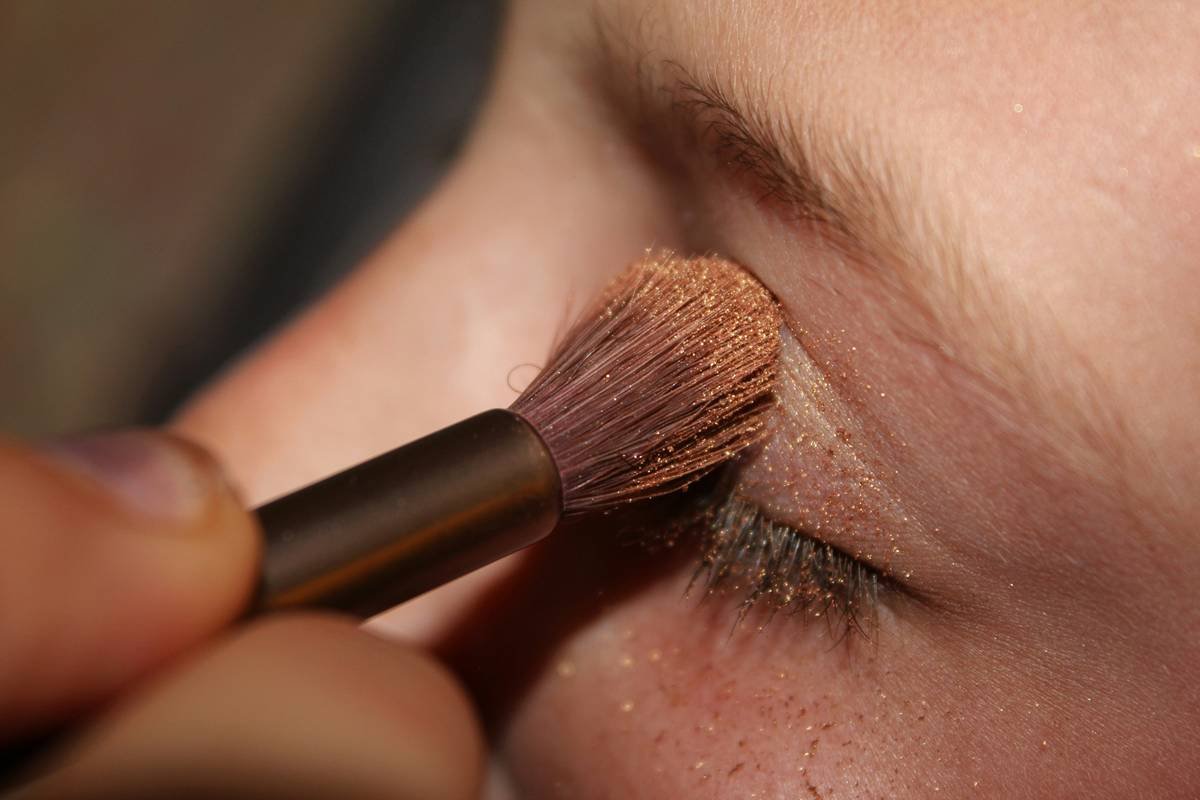
The skin around your eyes is up to 40% thinner than the rest of your face—and packed with nerve endings and blood vessels. That means zero tolerance for irritants. When you layer on conventional eyeshadows filled with mica, glitter, or preservatives like methylisothiazolinone (MI), you’re basically sending your delicate ocular zone into DEFCON 1.
I learned this the hard way during my early days as a makeup artist. I once used a popular “vegan” eyeshadow palette on a client with rosacea—and within 20 minutes, her upper lids looked like she’d been stung by bees. Turns out, “vegan” ≠ gentle. That palette contained dimethicone and synthetic fluorphlogopite, both known sensitizers for reactive skin types.
Dermatologists confirm that fragrance is the #1 cause of cosmetic contact dermatitis around the eyes (Journal of the American Academy of Dermatology, 2022). And don’t get me started on “waterproof” mascaras—they often rely on harsh film-formers that require aggressive scrubbing to remove, further compromising your skin barrier.
Optimist You:
“Just read labels—it’s easy!”
Grumpy You:
“Ugh, fine—but only if coffee’s involved. Also, half these ‘clean’ brands still sneak in linalool disguised as ‘botanical extract.’”
Your Step-by-Step Gentle Eye Makeup Routine
Step 1: Prep with a Soothing Barrier Cream
Before any pigment touches your lid, apply a thin layer of an occlusive-free moisturizer formulated for sensitive skin—think squalane, ceramides, or colloidal oatmeal. My go-to? Vanicream Moisturizing Cream. It’s free of dyes, fragrance, lanolin, and parabens, and creates just enough slip for seamless blending without clogging pores.
Step 2: Choose Cream-Based Eyeshadows
Powders kick up airborne particles that drift into your tear ducts. Cream or balm shadows (like those from Ilia or Kosas) adhere cleanly and require less rubbing. Apply with your ring finger—its lightest touch minimizes tugging.
Step 3: Skip Eyeliner on the Waterline
Yes, even if your favorite influencer does it. The waterline (inner rim) is mucous membrane—not skin. Depositing pigment here introduces bacteria and chemicals directly into your tear film. Opt for tightlining (between lashes on the upper root line) instead using a pencil so soft it glides like butter (Almay Intense i-Color Shadow & Liner is my holy grail).
Step 4: Use a Hypoallergenic Mascara
Look for ophthalmologist-tested formulas with minimal ingredients. Neutrogena Healthy Volume Mascara and Burt’s Bees Nourishing Mascara consistently rank high in clinical sensitivity trials. Replace every 3 months—old mascara breeds bacteria like a petri dish.
Step 5: Remove Gently—No Rubbing!
Soak a cotton pad in micellar water (Bioderma Sensibio is gold standard), press gently on closed lids for 10 seconds, then wipe downward—not side to side. Follow with a creamy cleanser if needed.
7 Non-Negotiable Tips for Truly Gentle Eye Makeup
- Patch-test religiously: Behind the ear for 48 hours—not on the hand!
- Ditch glitter and shimmer: Microplastics and mica flakes physically abrade thin skin.
- Clean brushes weekly: Bacteria buildup = irritation waiting to happen. Use baby shampoo.
- Avoid “long-wear” claims: They usually mean solvent-heavy formulas that dry out lids.
- Store makeup in a cool, dry place: Heat degrades preservatives, increasing contamination risk.
- Never share eye products: Even with your twin. Cross-contamination is real.
- Check expiration dates: Mascara = 3 months, liquid liner = 6 months, powder shadow = 2 years.
⚠️ Terrible Tip Disclaimer:
“Just use Vaseline as eye makeup remover!” Nope. While petroleum jelly is safe on lips, it can clog lash follicles and trap debris when used around eyes—leading to styes or milia. Stick to purpose-formulated removers.
Real People, Real Results: Before & After Success Stories
Case Study: Maya R., 32, diagnosed with seborrheic dermatitis
After years of flaking, red lids, Maya switched to a full gentle eye makeup routine: Ilia Limitless Cream Shadow in “Moonstone,” Almay eyeliner, and Burt’s Bees mascara. Within 2 weeks, her flare-ups ceased. “I cried putting on mascara without burning—it sounds dramatic, but it felt like freedom.”
My Own Journey:
As someone with chronic blepharitis (inflamed eyelids), I used to avoid eye makeup entirely. Now, with strict adherence to low-irritant formulas and no-waterline policy, I wear subtle definition daily—zero flare-ups in 18 months. Consistency + vigilance = game changer.
FAQs About Gentle Eye Makeup for Sensitive Skin
What ingredients should I absolutely avoid in eye makeup?
Fragrance (including “parfum,” “essential oils”), parabens, formaldehyde-releasing preservatives (DMDM hydantoin, quaternium-15), coal tar dyes (CI numbers like CI 77499), and glitter/microplastics.
Is mineral makeup always safe for sensitive eyes?
Not necessarily. While often marketed as “natural,” many mineral shadows contain bismuth oxychloride—which causes itching and redness in reactive individuals. Always check beyond the label.
Can I wear waterproof mascara if I have sensitive eyes?
Generally, no. Waterproof formulas require harsh surfactants for removal, which strips natural oils and exacerbates dryness. If you must, limit use to special occasions and double-cleanse gently.
How do I know if a product is truly hypoallergenic?
“Hypoallergenic” isn’t regulated by the FDA—it’s a marketing term. Look for clinical testing data, ophthalmologist/dermatologist approval seals, and minimalist ingredient lists (under 15 components).
Conclusion
Gentle eye makeup isn’t about sacrificing beauty—it’s about respecting your skin’s biology. By choosing irritant-free formulas, adopting low-friction techniques, and ditching outdated habits (goodbye, waterline liner!), you can enhance your eyes without triggering tears—literally.
Remember: your skin barrier is your first line of defense. Treat it like the VIP it is. Start small—a single cream shadow, a fragrance-free mascara—and build from there. Your calm, comfortable, beautifully defined eyes await.
Like a dial-up modem connecting to AOL in 2003… patience pays off. Gentle eye makeup takes practice—but the payoff? Glitch-free glam, every damn time.